Users increasingly search with full questions: "how do I check keyword rankings", "how often should I check rankings", "why did my rankings drop after a redesign". Google answers this trend with the People Also Ask box, or PAA: a block of related questions right on the results page, where each question expands into a short answer with a link to the source page. This box appears on most searches, and it gives your website a special opportunity: even if your page only ranks sixth or seventh for the main keyword, you can still appear on page one through an answer in the PAA box.
How the People Also Ask box works
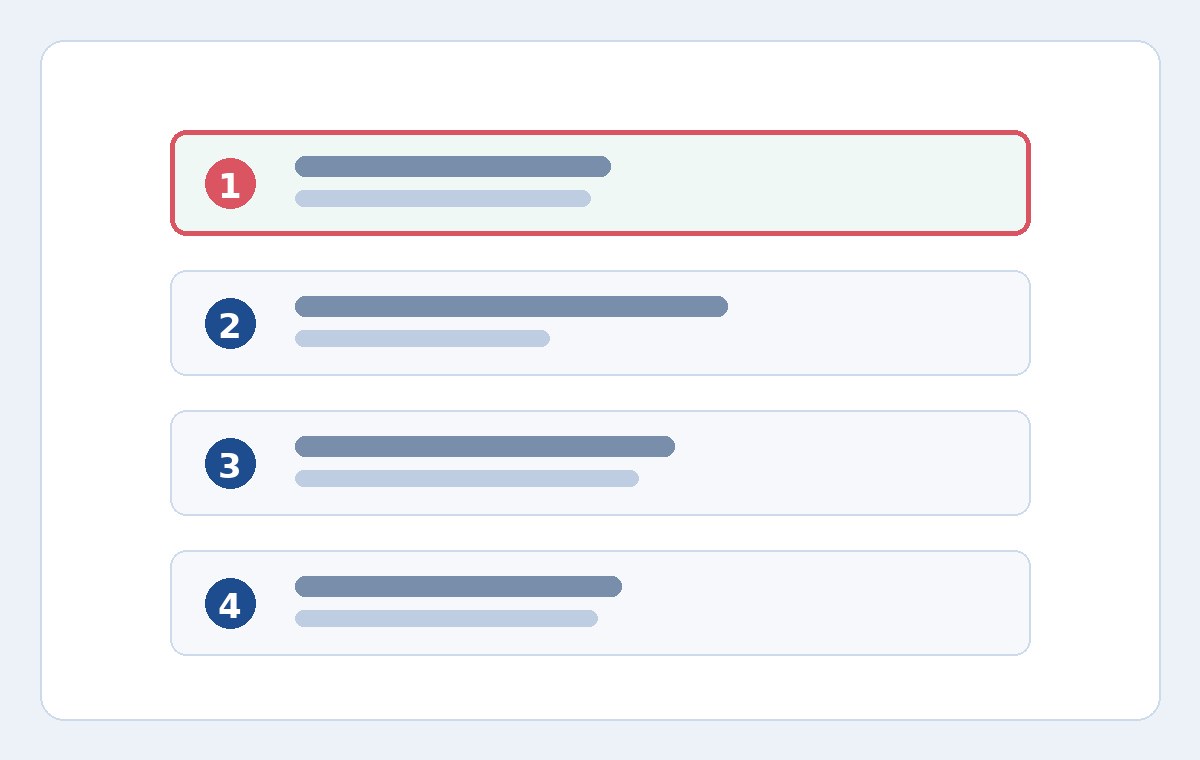
The PAA box is a block of questions related to the searcher's query. Clicking a question opens a short answer taken from a web page, with a link to that page, and Google loads two or three more questions below it. Unlike a featured snippet, which has only one spot at the top of the page, the PAA box holds several questions, and your page can hold both an organic ranking and a PAA answer on the same results page. The box also does not sit in a fixed position: for broad informational queries it often appears after the first organic result, while for commercial queries it may sit lower, after several results. Before targeting a question, search for the keyword that triggers it and see where the PAA box sits on that results page.
Find questions from three sources: the results page, Search Console and dedicated tools
The simplest way to find questions is to search your target keyword on Google, note the questions in the PAA box, click each one so Google loads more, and repeat for three levels; in a few minutes you will have ten to twenty related questions. The second source is Search Console: filter the performance report for queries containing "how", "what", "why", "can", "does" or "is" — these are question searches where your page already has impressions. Queries with high impressions but a low click-through rate are good candidates: you are being shown but not winning the click, and a PAA answer could bring that click home. The third source is dedicated tools such as AlsoAsked, which shows question trees per topic and is very useful when you want to cover every question around a topic instead of just a few scattered ones.
Pick winnable questions: the page already ranks, and the question matches your content
Not every question is worth targeting. Google picks PAA answers from pages it already trusts for the related query, usually pages sitting in the top twenty for the root keyword. If your page does not rank at all for that topic, your answer has almost no chance of being chosen, however well written it is. So prioritise questions where your page already ranks for the related keyword, and questions your page can genuinely answer with existing content or with one short added paragraph. A question that appears across many different keywords is worth more than one tied to a single keyword, because one answer can bring impressions from a whole keyword cluster. If you want to see how to group keywords by topic before picking questions, read the guides in the the Keyword.help blog of Keyword.help.
Format the answer so Google picks it: the question as heading, the answer right below
Google picks PAA answers much like it picks featured snippets: it looks for a passage that answers the question directly and makes sense on its own. The most effective format is to use the question itself as a subheading, then answer immediately below in about forty to sixty words, using short sentences and plain language, without beating around the bush. The answer must be self-contained, because readers only see that passage inside the box, not the rest of your article. Depending on the question, you can answer with a paragraph, a short list of steps, or a small comparison table. After writing the answer, read it on its own, separated from the article: if it still fully answers the question, the format is right; if you need the rest of the article to understand it, Google will struggle to pick it.
Track rankings for question keywords: two numbers for one keyword
For a question keyword, one keyword can give you two positions at the same time: the page's organic ranking and whether your answer owns a spot in the PAA box. When tracking, record both: where the page ranks today, and whether your answer is inside the PAA box, and for which keyword. The PAA box changes more often than organic rankings: Google may switch the source page for a question within days, or add new questions to a box you have never seen. So re-check your question list regularly, at least once a month, and note when you win a new question or lose one you held. Losing a question does not necessarily mean your content got worse — a competitor may have just written a better answer, or Google may have changed how it reads that question.
Common mistakes with question keywords
The most common mistake is writing an answer that is too long and rambling, so Google cannot extract any tidy passage from it. The second is targeting a question when your page does not rank for the related keyword, then being disappointed when the answer is never chosen. The third is tracking only organic rankings without recording PAA status, so you never know whether you are winning or losing on this second front. The fourth is writing an answer once and forgetting it: PAA boxes change over time, old answers can go stale or be overtaken by competitors. If you are building a question keyword list for your website, you can create an account at the sign-up page to set up a dedicated tracking project for this question group.
Conclusion
Question keywords deserve their own group in your tracking list: find questions from the results page, Search Console and dedicated tools; pick questions where your page already ranks and can genuinely answer; write short answers directly under a heading that is the question itself; and track both organic rankings and PAA box status. The question box is the shortest path for a page that has not reached the top three to still appear on page one, and it is the most honest source of content ideas, because it comes straight from what users are actually asking.