You open your tracking dashboard one morning and see a key keyword fall from position 4 to position 11 — every SEO has been there. The most dangerous reflex at that moment is to panic and fix everything at once: rewrite the title, rewrite the content, pile on links. Fixing the wrong thing not only fails to rescue the ranking, it can make the situation worse. This article lays out a calm, step-by-step process for finding the true cause of a drop before you touch anything.
Step 0: Confirm the keyword has actually dropped
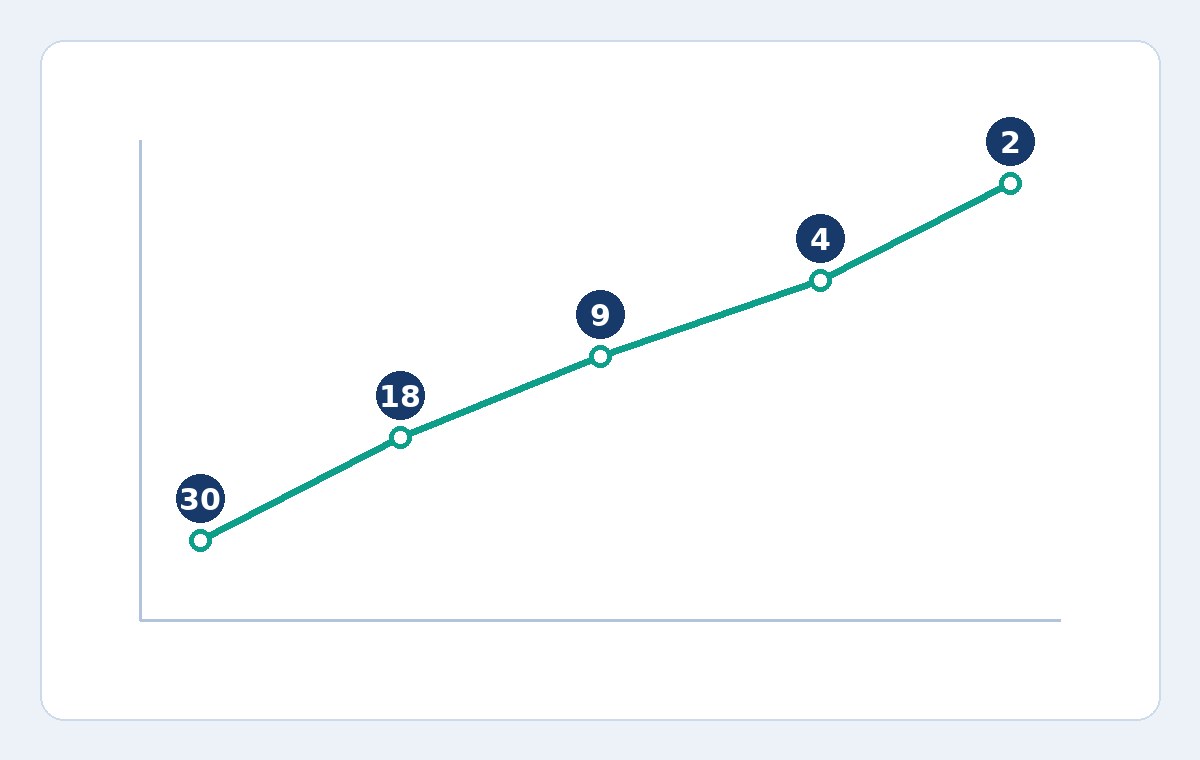
Before drawing conclusions, make sure the number you are seeing is real. Rankings naturally wobble a little from day to day, and a single check can be skewed by different checking conditions. Recheck with the same country, the same device, and the same location as previous checks, and look at the history of at least the last 7–14 days:
- Dropping 1–3 positions over a few days and hovering around there: usually natural fluctuation, no intervention needed yet.
- A sharp fall out of the Top 10, or disappearing from the Top 30: a sign that serious investigation is needed.
- Many keywords dropping on the same day: most likely connected to a site-wide change or a Google update.
- Only one keyword drops while the rest stay stable: the problem usually lies with that keyword's own landing page or its own competitors.
A step-by-step process for finding the cause
Step 1: Check that the landing page is still "healthy"
Open the page that ranks for that keyword directly and ask yourself: is the page still reachable, has it been redirected to a different page, has it accidentally been tagged noindex or blocked by the robots.txt file? More than a few "mysterious ranking drops" turn out to be nothing more than a recent technical change that stopped Google from indexing the page the way it did before.
Step 2: Review recent changes to the page
List every change made in the last 2–4 weeks: edited title, rewritten content, restructured headings, changed internal links, a redesign, or a server move. Rankings rarely fall for no reason — in most cases, the cause is sitting right there in that list of changes. If you just changed the page title, there is a good chance Google is re-evaluating the page based on the new signals.
Step 3: Check user experience and speed
Has the page become slower after adding new images, videos, or code? Does the mobile version have display problems that hide the main content? Google places growing weight on user experience, and a page that has clearly gotten worse in speed or presentation can absolutely lose its ranking to a faster competitor.
Step 4: Look at the competitors for that specific keyword
See which pages now occupy the positions above you. You may not have gotten worse at all — a competitor may have just published better, more complete content, or a new rival may have entered the game. In that case, the right response is not fixing errors but raising the quality of your content until it deserves the position back. A systematic way to keep an eye on competitors' positions is described further in the the Keyword.help blog if you want long-term tracking instead of one-off glances.
Step 5: Consider factors beyond your own page
If many websites in your industry fluctuate during the same period, Google has very likely rolled out an algorithm update. With this kind of movement, the right move is to wait and observe for at least one to two more weeks instead of making constant changes, because rankings often settle back down on their own after each update.
Step 6: Check internal links and the page's role on the site
Sometimes the page itself has not changed at all, but the pages around it have. If a site restructure removed internal links pointing to the landing page, or a menu change pushed it deeper into the site's hierarchy, Google may gradually value it less. Walk through how many internal links the page still receives and whether stronger pages on your site still link to it. Restoring a few well-placed internal links from relevant articles is a low-risk fix that is often overlooked precisely because the landing page looks untouched.
It is also worth ruling out a quieter problem: another page on your own site may have started competing for the same keyword. When two of your pages match the same search intent, Google can alternate between them or pick the weaker one, and the ranking you track appears to drop. Check which URL Google is actually showing for the keyword in your tracking history; if the ranking URL keeps switching, consolidate the two pages or sharpen each one's intent so they stop competing with each other.
After fixing it, how should you track the recovery?
Once you have identified the cause and made a specific change, note down the date of the change and track the ranking daily for at least the following two weeks. Change only one factor at a time, otherwise you will never know which factor produced the result. Avoid tinkering repeatedly, because every major change forces Google to spend more time re-evaluating the page.
So this tracking does not depend on memory and manual work, you can switch on automatic daily checks for your project on Keyword.help (a feature of the paid plans): rankings are recorded regularly under exactly the same conditions, so when a keyword moves, you immediately have the historical curve to compare against the moment you made your change. Plan details are on the the pricing page if you want to upgrade as the number of tracked keywords grows.
Conclusion
A ranking drop is not as frightening as handling it blindly. Follow the order: confirm how far it fell, check the landing page, review recent changes, look at the competitors, and only then decide what to fix. With complete historical data, every drop becomes a problem with clear clues instead of a nasty surprise.