Two websites can both sit at position 8 for a keyword, yet the stories behind that number can be completely different. One has just fallen from the Top 3, while the other has just climbed from outside the Top 30. Looking only at the current position, you cannot tell whether to celebrate or worry. To read a ranking trend chart correctly, you have to look at the shape of the journey, not just the final point.
Noise: swings of 2-3 places over a few days
The most common shape on a ranking chart is small fluctuation: position 9 today, 11 tomorrow, back to 10 the day after. This is usually noise, not a signal. Google constantly re-tests rankings, competitors make small content changes, and measurements can differ slightly between checks. If the swing is only 2-3 places and the overall trend stays flat, you do not need to act. The common mistake is reacting to every small move: changing a title today because you dropped one place, then changing it back tomorrow because you rose one place. Hasty edits like that do not improve rankings; they only leave you unable to tell which change actually worked.
A steady climb: the best signal you can see
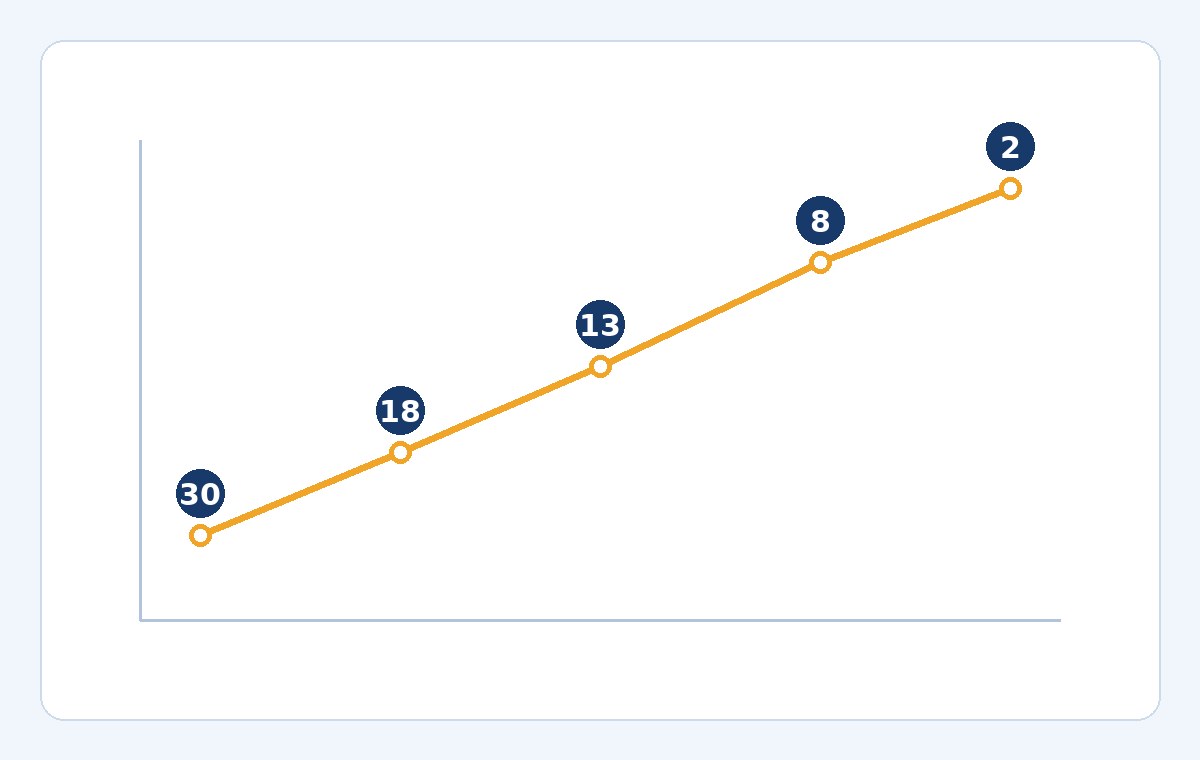
A steady climb is a line rising slowly but consistently over many weeks: from outside the Top 30 into the Top 20, then the Top 15, then the Top 10. Each step may be small, and the line may dip slightly now and then, but the overall direction keeps pointing up. This is a sign that your content is matching search intent better and better and that Google is gradually trusting it more. When you see a steady climb, the wisest move is patience: keep doing what you are doing, fill remaining content gaps, improve the page experience, and let time do its work. Do not break the momentum with a full rewrite just because you are impatient to rise faster.
A plateau at positions 8-15: your page is stuck
Another shape worth attention is a long flat stretch around positions 8 to 15. Your page is good enough to reach the first page or close to it, but not strong enough to break into the leading group. This usually means your content covers the topic at a basic level but lacks depth, concrete evidence, or a full answer to one important part of the search intent. The way out is to look at the pages ranking above you and ask what they have that yours does not. Adding exactly that missing piece is often the key to escaping the plateau.
A single-keyword cliff: one term falls while the rest hold steady
When a single keyword drops sharply, for example from position 4 to 25 within a few days, while other keywords on the same page stay stable, the problem usually lies with that keyword or its results page. A competitor may have just published stronger content for exactly that term, or Google may have changed how results are displayed for that query, for instance by adding an answer box that pushes organic results further down. The first step is to inspect the actual results page with your own eyes: is your page still there, who has overtaken you, and is there anything new in the layout? Do not rush to rewrite the whole page when only one keyword is affected, because the cause may not be your content at all.
A multi-keyword cliff on one date: a site-wide or algorithm cause
Far more serious is when many different keywords, across many different pages, fall sharply at the same time. This shape almost always points to a cause at the website level or the algorithm level, not at individual pages. The site may have a technical fault such as blocked indexing or a sudden slowdown, or Google may have rolled out a major update. When you see a simultaneous cliff, check the technical side first: are the pages still reachable, is anything blocked, and is the server returning errors? Then compare the date of the drop with algorithm updates noted by the SEO community. Identifying the right level of cause saves you from rewriting content at random while the real problem is technical.
A flat line: stable, or no longer measured properly
A flat line is a line that does not move at all for a long time, for example sitting at position 22 for weeks on end. Sometimes this means your page is genuinely stable at that level, but sometimes it means the measurement itself has a problem, such as the keyword no longer being checked regularly. Before concluding anything, check that data is being updated daily. With Keyword.help, automatic daily checks are enabled per project on paid plans, so a long flat line usually means something real: the page has stalled and needs a substantial content change, not a few small tweaks, before it can move again.
Rules for reading charts: weekly, monthly, split by device
Three rules will prevent most hasty conclusions. First, judge by week and by month, not by day: the weekly trend shows direction, the monthly trend shows real strength. Second, always split the numbers by device, because rankings on phones and computers can differ considerably, and a rise on desktop can hide a fall on mobile. Third, whenever you see a big movement, check whether the ranking page itself has changed: Google sometimes switches to ranking a different page on your site for the same keyword, and that is an important clue about which page fits better. If you do not yet have a stable tracking tool to apply these rules, you can start a first project at the sign-up page and study the trend charts of your own keyword set.
Conclusion
A ranking chart is not a scoreboard to worry over every day; it is a history that shows where your pages are heading. Ignore noise of 2-3 places, stay patient during a steady climb, find the missing content behind a plateau at 8-15, inspect the results page for a single-keyword cliff, and check the technical side first for a simultaneous cliff. If you would like to read more rank-tracking guides, you can browse the Keyword.help blog at the Keyword.help blog and start reading your own charts this week.